
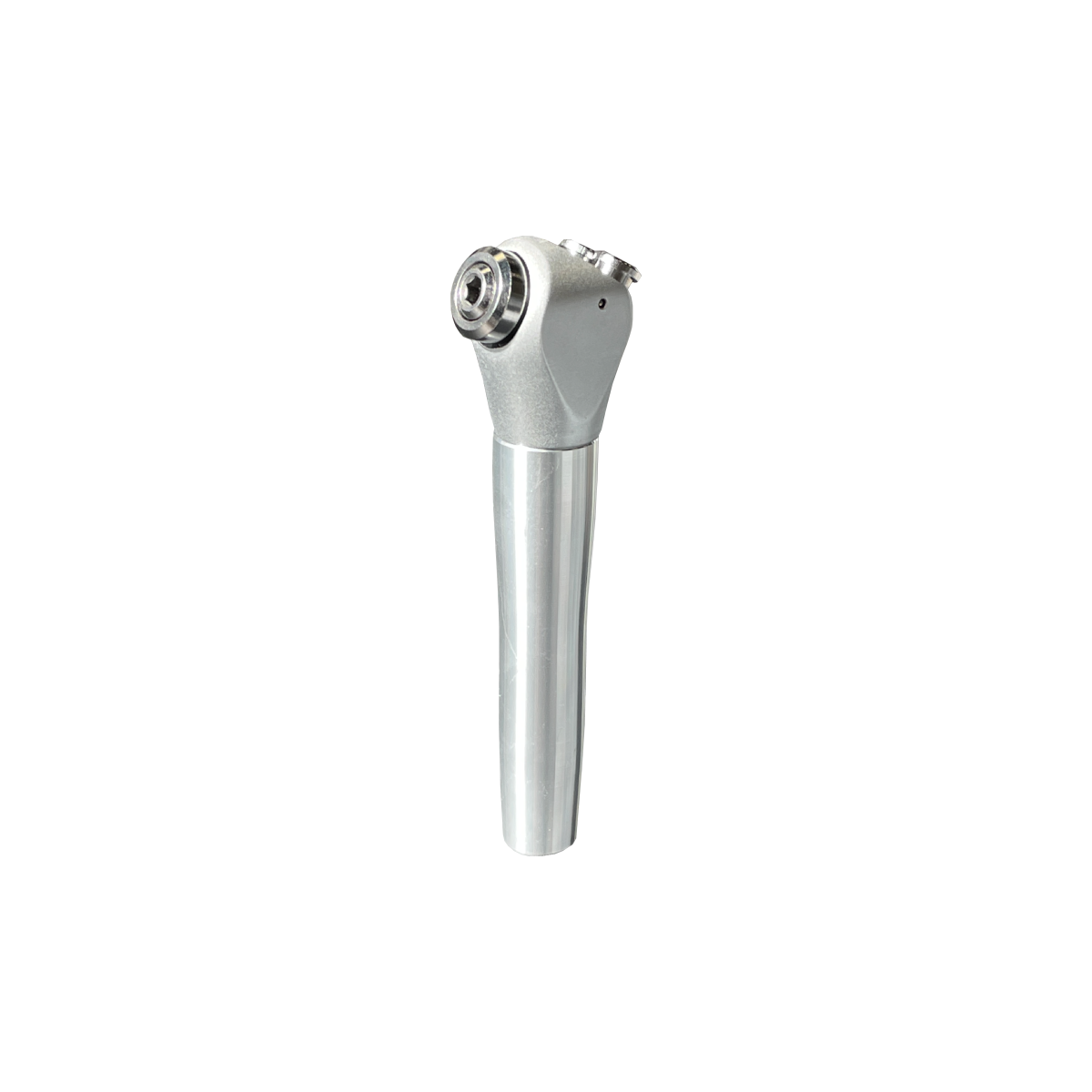

$40.00 In Stock
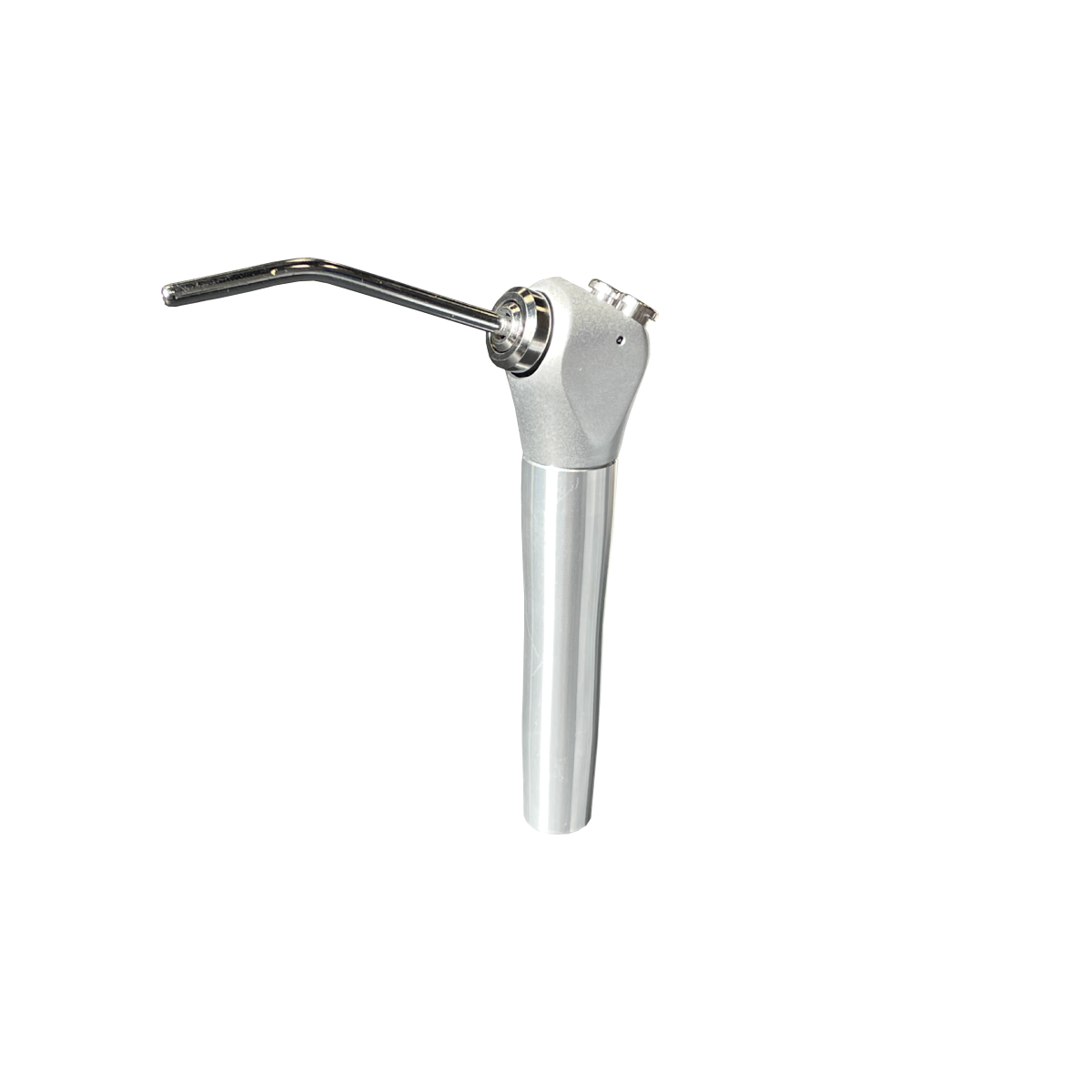
| Article: | SWAA1 |
| Brand: | MDS |
| Availability: | In Stock |
MDS Angled Air-Water Syringe — a three-function dental syringe for working with air, water, and an air-water spray.
Its task does not require complex electronics: supplying air, rinsing the working area, drying the surface, or forming an air-water spray.
The angled design changes the direction of the working part relative to the handle, so the instrument can be more convenient in clinical situations where a straight syringe requires the dentist to change the position of the hand more significantly.
MDS Angled is a tool for the dentist’s basic daily tasks, rather than an attempt to turn a dental syringe into a complex multifunctional device.
The MDS page lists article number SWAA1, the status “In stock,” and the price of UAH 451 at the time of checking.
A dental syringe is not needed for just one procedure. It is used throughout the appointment whenever the dentist needs to quickly change the condition of the working surface.
Dry air is used for:
• drying the tooth;
• removing residual moisture;
• cleaning the working surface;
• better visual assessment of the tooth after drying.
Water is needed for:
• rinsing;
• cleaning the working area;
• cooling;
• removing material residues and contaminants.
Simultaneous delivery of water and air forms a spray that helps clean and cool the working surface.
These three functions represent the standard operating logic of a dental air-water syringe. For example, Mytronic explicitly describes the purpose of its three-function syringes as delivering water, air, or a mixture of both for drying, cleaning, and cooling the tooth and surrounding area.
The main feature of MDS is its angled design.
This is not simply a difference in appearance. The angle of the working part changes the position of the instrument relative to the hand and the working field.
In practice, this can be convenient:
• when working in lateral areas;
• when accessing distal surfaces;
• when working on the upper and lower jaws;
• when the syringe is positioned on the dentist’s or assistant’s delivery unit in a way that makes a straight instrument less convenient.
At the same time, it would be incorrect to say that an angled syringe is always better than a straight one.
If a dentist is accustomed to a straight design or a particular dental unit is better arranged for a straight syringe, the advantages of the angled design may be minimal.
Therefore, MDS Angled should be selected based specifically on the ergonomics of the individual workstation.
In restorative dentistry, a dental syringe is used practically at every appointment.
It helps the dentist:
• clean the tooth;
• rinse the working surface;
• dry enamel or dentin;
• control moisture in the working field;
• cool the area;
• maintain visibility during the procedure.
For a general dentist, the key advantage is not that the syringe has many functions, but that the three required functions are combined in one instrument.
In prosthodontics, air and water are regularly used during preparation of the working surface.
A dental syringe may be needed for:
• cleaning a prepared tooth;
• rinsing;
• drying;
• cooling;
• removing residues after individual stages of treatment.
The angled design can be useful when the dentist needs to direct the flow to the required area without changing the position of the entire arm.
For an endodontist, it is important to define its role correctly.
MDS Angled can be used for:
• cleaning the working field;
• rinsing external surfaces;
• drying;
• maintaining cleanliness of the working area.
However, the syringe does not replace an endodontic irrigation system, ultrasonic activation of the irrigant, or paper absorbent points for drying root canals.
This is an important professional distinction.
In surgery, the use of a dental syringe should be considered separately from restorative or prosthodontic practice.
Before use, it is necessary to check:
• the permitted cleaning method;
• the possibility of sterilization;
• the specific processing cycle;
• compatibility with the dental unit system.
These parameters are not provided on the MDS page for model SWAA1. Therefore, we do not specify an autoclave temperature or a specific sterilization cycle as confirmed characteristics.
There are three scenarios in which this syringe has an obvious practical purpose.
If the standard syringe is damaged or needs replacement, there is no need to automatically purchase the most expensive model on the market.
First, it is worth determining whether the dentist actually needs the additional functions offered by premium models.
For a new dental office or a second workstation, MDS Angled provides the basic functionality of a dental syringe without significant expense.
For a clinic, having a backup syringe is a practical solution. If the primary instrument fails, its replacement should not become a reason to stop patient treatment.
The premium segment makes sense to compare not by the number of buttons, but by what exactly the manufacturer additionally guarantees and documents.
Luzzani data: the angled Minimate has a length of 193 mm, a weight of 78 g, and cold air, cold water, and cold spray functions; the sleeve and tip can be removed for autoclaving at 134 °C, and the sleeve is replaceable.
For the standard 3F, KaVo specifies a weight of 91 g, straight and angled versions, 360° cannula rotation, removable cannula and sleeve, and sterilization capability for these components. KaVo also offers the Minilight 3F / G3F weighing 104 g and an MF version weighing 121 g with heating and light.
The Mytronic MC 3FP-S weighs only 35 g and features an angled or straight design, a removable head, quick-disconnect, and sleeve options for different holders. Officially stated parameters are air pressure of 3–6 bar, water pressure of 0.5–6 bar, air flow of 10–21 L/min, and water flow of 72–320 mL/min.
If MDS Angled is viewed as a professional instrument, its strengths are simplicity and price.
On the official MDS page, it costs UAH 451.
For comparison, the angled Luzzani Minimate is currently available on the Ukrainian market at approximately UAH 7,460 to more than UAH 11,000, depending on the seller and configuration.
This means that MDS and Luzzani are effectively aimed at different price scenarios.
If a dentist needs the basic functions of a dental syringe, paying dozens of times more solely for the brand and additional ergonomics is not always economically justified.
It would be incorrect to call MDS better than Luzzani, KaVo, or Mytronic in every aspect.
Premium models have advantages where a thoroughly documented design is important.
Advantages:
• weight of 78 g;
• angled length of 193 mm;
• removable sleeve and tip;
• autoclaving at 134 °C;
• replaceable sleeve;
• detailed manufacturer documentation.
The disadvantage compared with MDS is the significantly higher price on the Ukrainian market.
Advantages:
• 3F as part of the large KaVo ecosystem;
• straight and angled versions;
• 360° cannula rotation;
• removable cannula and sleeve;
• sterilization;
• versions with heating and illumination are also available.
The disadvantage is that if the dentist only needs water, air, and spray, some of the capabilities of the premium ecosystem may simply be unnecessary.
Advantages:
• extremely low weight — 35 g;
• removable head;
• quick-disconnect;
• several compatible sleeve options;
• clearly documented pressure and flow performance;
• angled and straight versions.
The disadvantage is that this is already a specialized premium solution, and its advantages are most noticeable where the dentist truly values minimal weight, the connection system, and hygienic design.
If the syringe is used as a standard working instrument and the following are not required:
• minimal weight;
• quick-disconnect;
• removable head;
• 360° cannula rotation;
• heating;
• illumination;
• an extended compatibility system,
then the basic MDS model may be the more economically logical choice.
This is particularly relevant for:
• offices with multiple workstations;
• clinics that need backup instruments;
• training offices;
• equipping new dental units;
• replacing an inexpensive standard syringe.
The publicly available information on MDS Angled, article number SWAA1, does not include confirmed numerical data regarding:
• weight;
• length;
• working air pressure;
• working water pressure;
• air flow rate;
• water flow rate;
• sterilization temperature;
• number of sterilization cycles;
• quick-disconnect;
• 360° cannula rotation;
• heating;
• illumination.
The product page essentially lists the article number, brand, availability, and price, without a detailed technical specification.
Therefore, the main disadvantage of MDS compared with premium models is not proven inferior quality, but the significantly smaller amount of published technical information.
This is an important distinction.
For a general dentist — yes
If a simple syringe is needed for daily work without additional functions.
For a prosthodontist — yes
Especially if the dentist prefers an angled design and uses the syringe for rinsing, drying, and cleaning.
For an endodontist — yes, as an auxiliary instrument
But not as a replacement for specialized endodontic systems.
For a surgeon — after verifying sterilization
Before use, it is necessary to confirm that the instrument complies with the requirements of the specific processing protocol.
For a multi-office clinic — particularly logical
The low cost makes MDS attractive as a working or backup instrument when several workstations need to be equipped without a large budget.
A premium syringe makes sense if the dentist experiences a daily need for specific additional capabilities.
Luzzani — if low weight, removable components, and documented sterilization at 134 °C are important.
KaVo — if integration with the KaVo ecosystem, 360° cannula rotation, or a version with heating and light is important.
Mytronic — if the priorities are a minimum weight of 35 g, quick-disconnect, and the most thoroughly documented technical parameters.
MDS — if the basic functions of a dental syringe are required and there is no reason to pay extra for features the dentist will not use.
Water. Air. Spray. Angled design. Low price.
This is not a syringe to buy for the sake of technological options.
It is a solution for situations where the dentist needs a standard working instrument for three basic tasks and the equipment budget matters.
This is precisely the segment in which MDS Angled has the clearest competitive position.
To order, contact the managers of the MDS company
+38 (068) 337 37 37
For service or repair issues, contact the MDS service center
https://mg-dental.com.ua/service/
$40.00 In Stock

$40.00 In Stock

$10.00 In Stock